Changing how the world cleans
Tersano technology turns water and oxygen into a powerful cleaner and disinfectant, with nothing to store or dispose of — and our patented grease trap keeps fats, oils and grease out of the sewer.
Stabilized aqueous ozone, on demand.
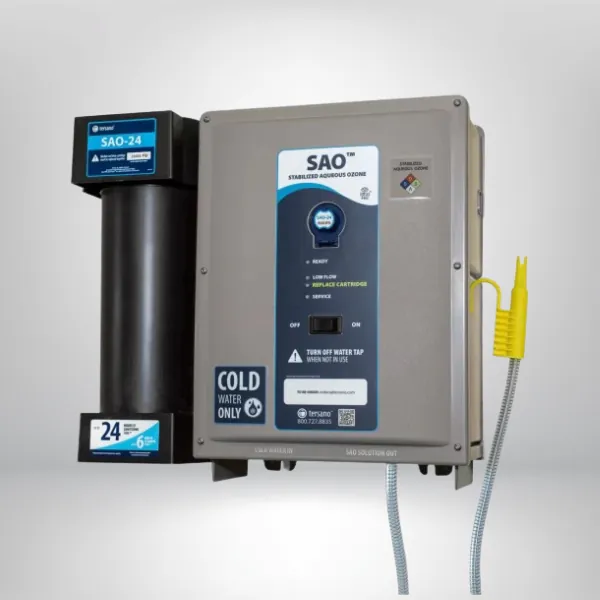
SAO Dispenser
Makes cleaning, sanitising and deodorising effortless by producing Stabilized Aqueous Ozone on demand from water and air alone.
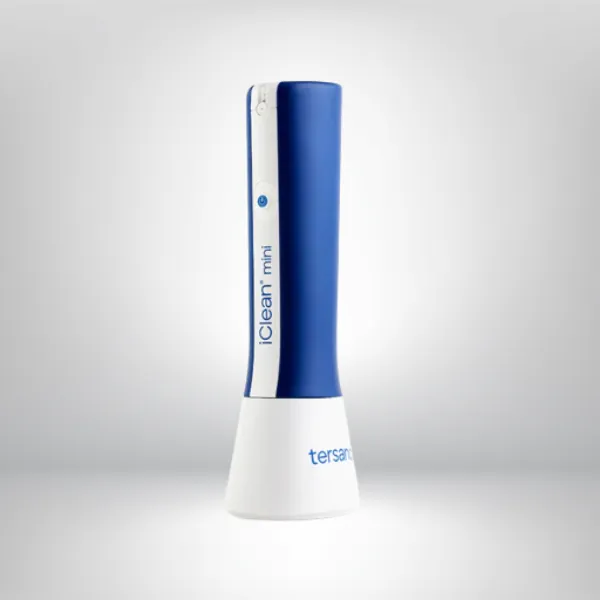
iClean Mini
Turns ordinary tap water into an all-purpose natural cleaner on demand — 50% stronger than bleach, yet safe for people, premises and the planet.
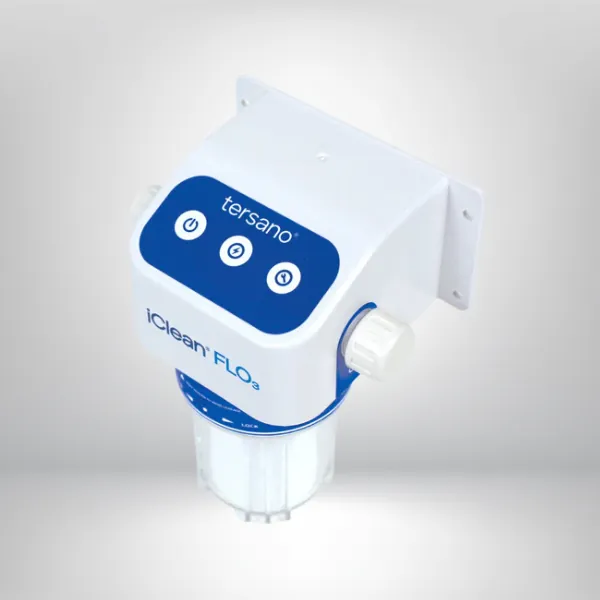
iClean FLO₃
Converts tap water into a chemical-free cleaning solution on demand. Compact, easy to install and connected directly to your water line.
Tap water in, the janitor's closet out.
The lotus PRO V9 is what makes the solution the rest of this page runs on. Cold mains water passes through an SAO cartridge that strips the minerals which would shorten ozone's life, then through the dispenser, which infuses it with ozone. What comes out of the nozzle is a cleaner, sanitiser and deodoriser in one, made on the spot at up to 11 litres a minute.
It replaces up to 90% of the chemicals in a cleaning cupboard, and when the job is done the ozone reverts to water and oxygen. There is nothing to rinse off and nothing to dispose of.
Not to be confused with the Lotus WTS further down this page. Same name, different job: that one keeps biofilm out of the water lines themselves.
Made on site, on demand
Nothing to order, store or mix. The system needs cold potable water, a drain and a standard 120–220V outlet.
Tested and approved
Up to 99.99% reduction of organisms including E. coli, Salmonella, Listeria and Influenza A. Approved by Health Canada, USDA, EPA, FDA, Green Seal and HACCP.
Reports on itself
The V9 sends usage to the iClean dashboard over Wi-Fi — cartridge life, cleaning times, and chemical and carbon reductions you can put in a report.
Two cartridges, one machine
| Cartridge | SAO-24 | SAO-4 |
|---|---|---|
| Disinfectant for | Up to 24 hours | Up to 4 hours |
| Cleaner for | 6 days | 3 days |
| Capacity | 3,000 litres | 5,000 litres |
Spent cartridges go back to Tersano for recycling through their closed-loop programme. A desiccant filter pack will also run the machine on plain aqueous ozone, without a cartridge.
What it will and will not do
- Floors, glass, stainless steel, food-contact surfaces
- Carpet, upholstery and fabrics, including removing residues
- NSF-approved no-rinse; HACCP approved for food contact
- Works the same in hard or soft water
- Kills living mould spores, but dead spores still need scrubbing
- Everyday soils; heavy industrial grease still needs a degreaser
- Never mix it with other chemicals — it only weakens it
Where it earns its keep
Treated water is only clean until the pipe undoes it.
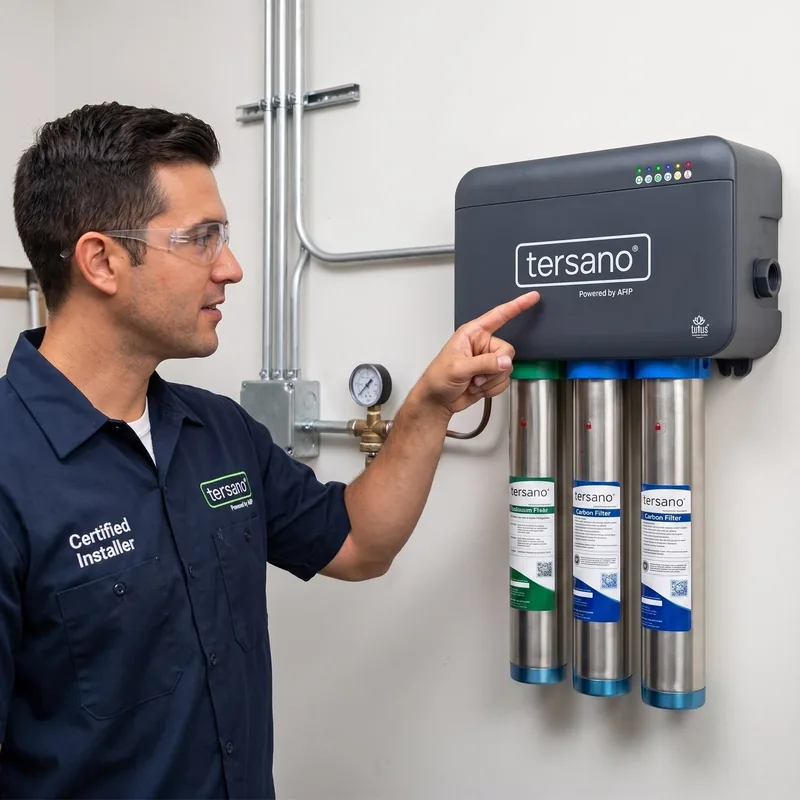
Most of the bacteria in a water system are not floating in the water — they live in biofilm on the inside of the lines, where a conventional filter never reaches them. Lotus works on the line itself, running automated cleaning cycles with aqueous ozone so a film never gets the chance to establish.
The ozone reverts to oxygen and water when the cycle finishes, so nothing is left in the line to flush out, taste or dispose of.
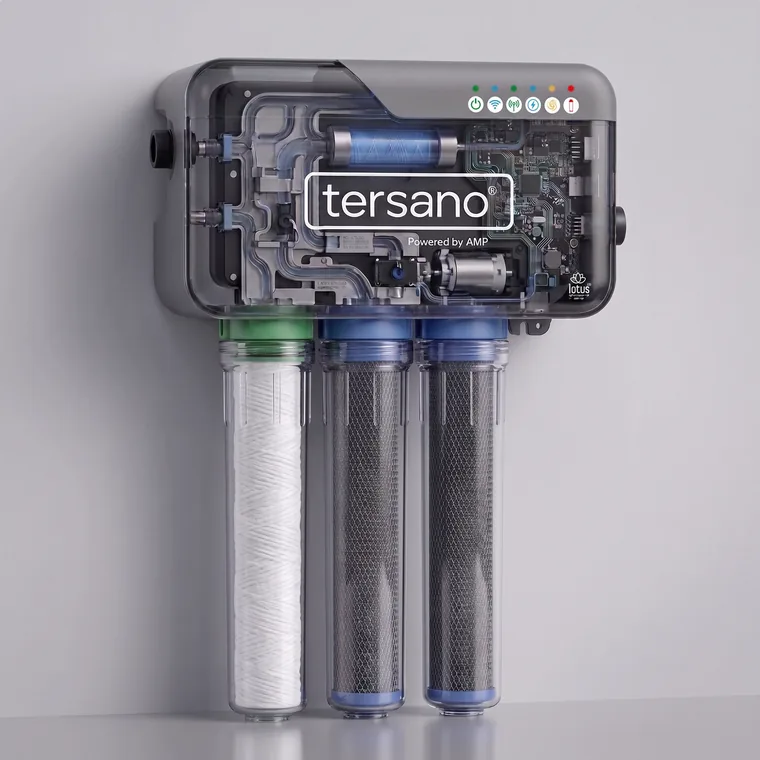
What it does
- Active Microbial Protection — blocks biofilm before it forms
- Guards against Pseudomonas, coliform and biofilm regrowth
- Automated forward-flush and back-flush cycles
- Self-cleaning filter set, changed annually
- RFID-tagged filters report their own life and performance
- Protects taste and clarity in whatever it feeds
The cost of leaving it alone
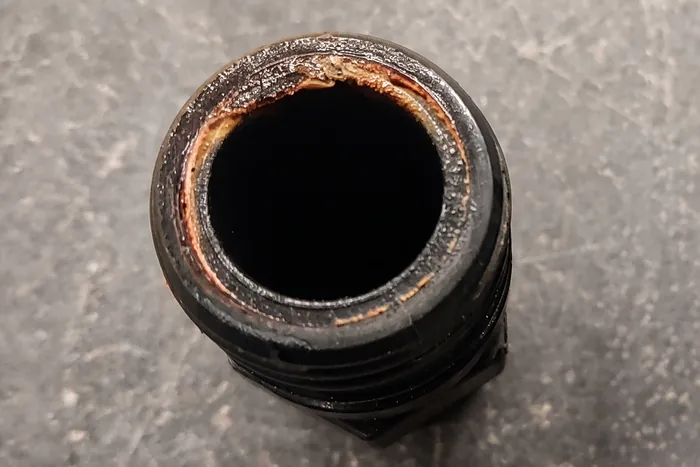
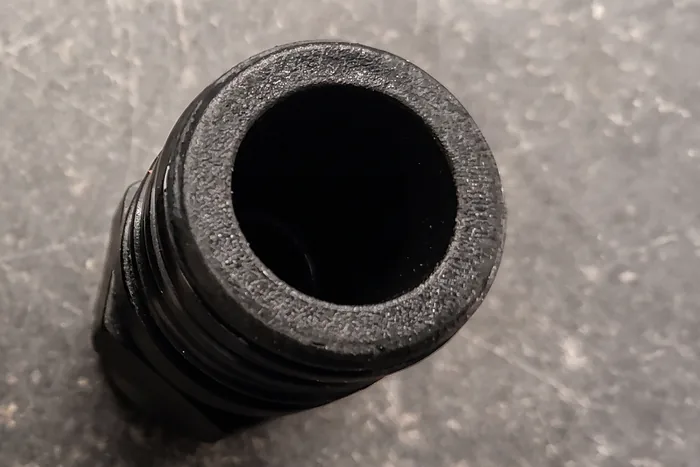
A sediment filter has no defence against a pathogen, and a carbon filter stops being part of the solution the moment it saturates: from then on it is a nutrient-rich surface that a colony can feed on. Biofilm is what makes that stick — it resists chemical cleaning and survives freezing, which is why scrubbing a line clean does not keep it clean.
A filter that traps is a filter that feeds.
Conventional systems catch contaminants and hold them in the line. Lotus filters, then cleans itself and everything downstream of it, on a cycle nobody has to remember to run.
It is worth reading the fine print on whatever is fitted now: most filtration systems quietly assume somebody will disinfect them by hand on a schedule. That assumption is where the maintenance hours go, and where the biofilm comes back. Tersano began as a water treatment company twenty-five years ago and the technology has been through both laboratory and field trials since.
Advanced protection
Works against Pseudomonas, coliform and biofilm at the source rather than catching them downstream.
Consistent output
Clear water and a steady taste profile, with no chlorine interference or contamination off-flavours.
Equipment monitoring
RFID-tagged filters report their own life and performance to the iClean dashboard, in real time.
Automated cycles
Forward-flush and back-flush run on schedule, set remotely, without taking the system offline.
Longer equipment life
Aqueous ozone is non-corrosive and needs no rinse, so kit is stripped down and rebuilt far less often.
Less to buy and dispose of
Fewer packaged chemicals, less water lost to flushing, and less chemical disposal to account for.
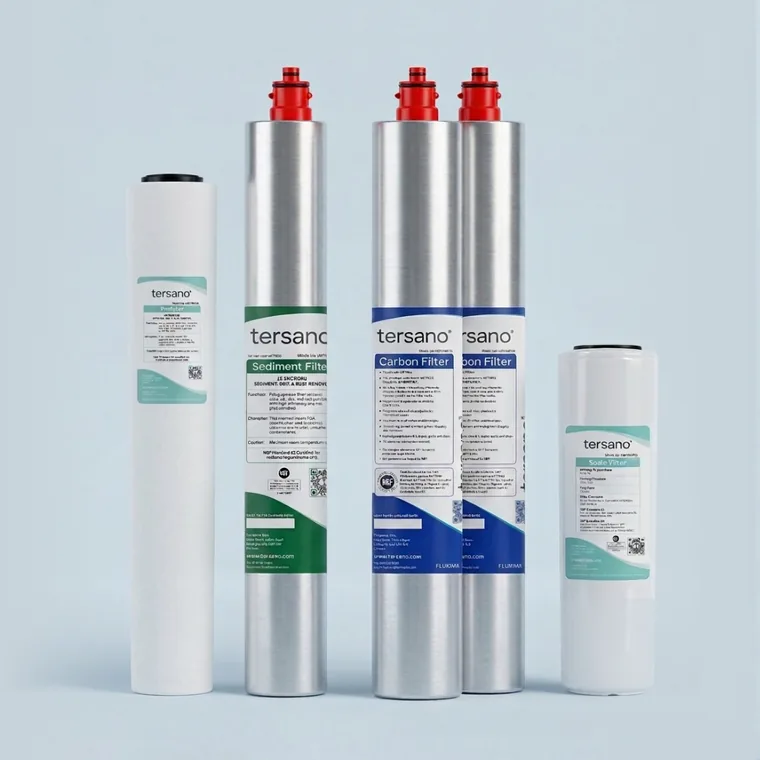
The filter stack
| Stage | Rating | What it takes out |
|---|---|---|
| Prefilter | 5 micron | Large debris, protecting everything downstream |
| Sediment filter | 5 micron | Fine particles — sand, dirt, rust |
| Carbon filter × 2 | 0.45 micron | Chlorine, chemicals and impurities |
| Scale filter | Optional | Mineral build-up, for hard-water sites |
Supplied as an annual replacement kit, with housings for the prefilter and scale filter so a change is a swap, not a strip-down.
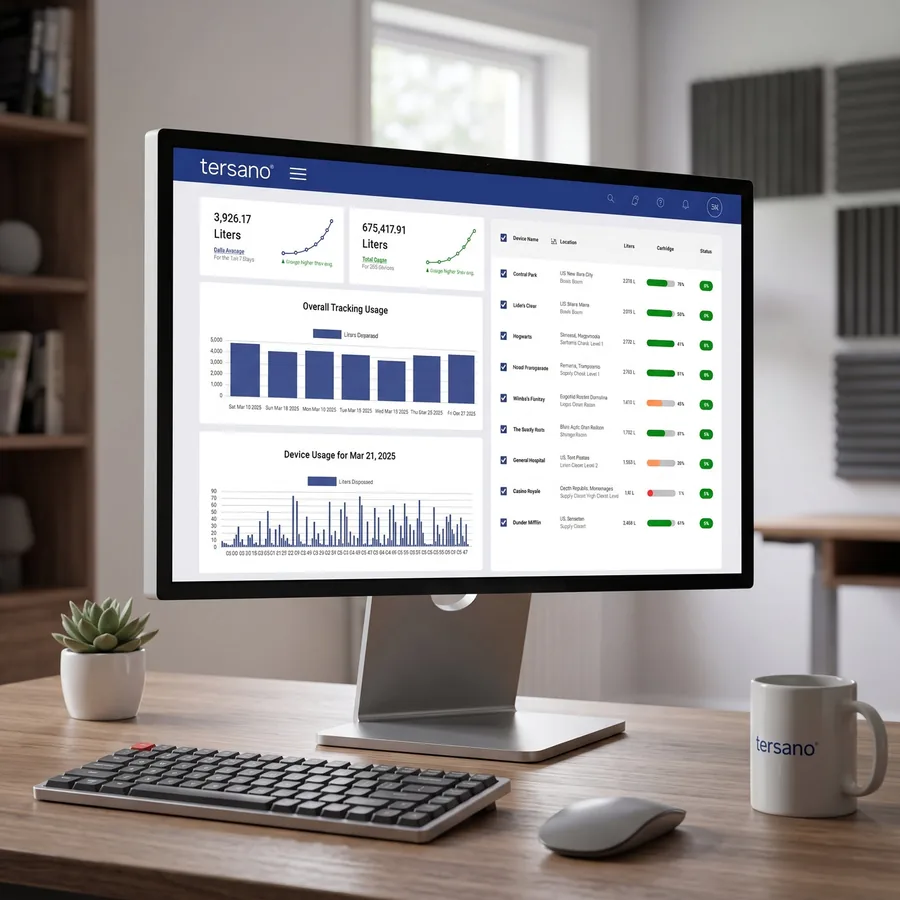
Watched, not guessed at
Each filter carries an RFID tag, so the system knows what is fitted, how long it has been in and how it is performing. That goes to the iClean dashboard along with usage per device, which is the difference between scheduling a filter change and discovering you needed one.
- Retrofits in place of an existing filtration system
- Runs unattended — no daily operator involvement
- Cycles scheduled remotely, with no downtime
- Handles hard water; scale filter optional
- No-rinse: aqueous ozone needs no flush afterwards
- Pairs with iClean FLO₃ on ice machines
Belgium, quick-service
After years of problem bacterial results, two QSR sites brought Pseudomonas down to zero within months of fitting Lotus. Beyond the test results, the savings show up as fewer service calls, less protective equipment, and no repeat testing after a non-conforming result.
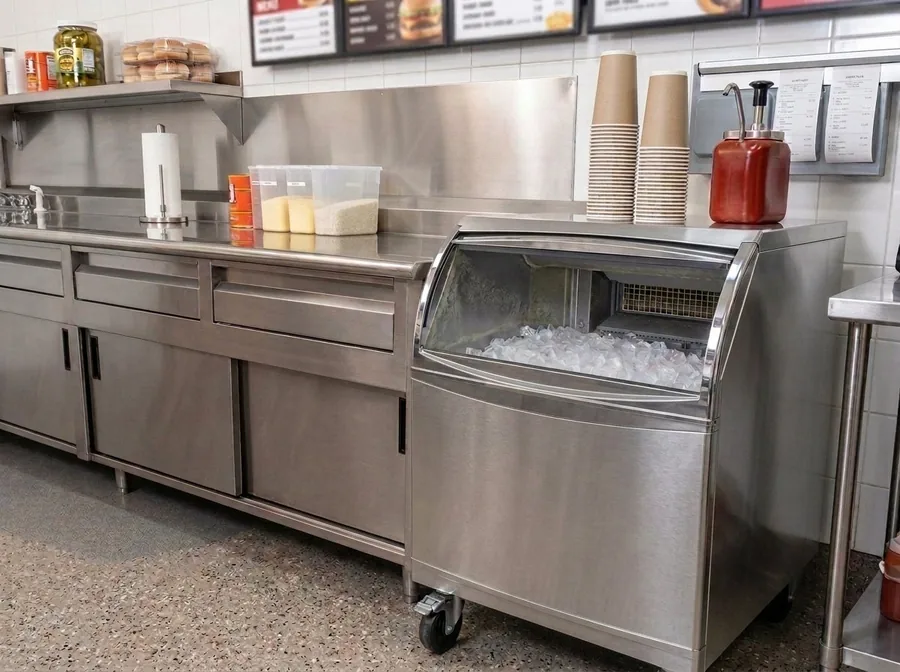
Where it goes
Not to be confused with the lotus PRO V9 above. Same name, different job: that one turns tap water into a chemical-free cleaner; this one protects the supply itself.
Fewer chemicals in the building, fewer on the invoice.
- Safe and non-toxic for staff and occupants
- Effective and reliable against everyday pathogens
- Eco-friendly: no packaging, no chemical waste stream
- Easy integration into existing cleaning routines
Stanford University
Adopting the technology reduced chemical usage in residences by over 90%.
Stop the grease before the sewer does.
A high-performance grease trap that separates fats, oils and grease from kitchen wastewater before it reaches the sewerage system. It is a pre-treatment stage, fitted between the sink and the drain, and it is the cheapest point at which a blockage can be prevented.
The Razak Three (Type B) is built for premises with more than one food outlet — canteens, restaurants, residential kitchens and food courts — where grease and solid waste otherwise accumulate faster than a pipe run can clear them, taking odour and blockages with them.
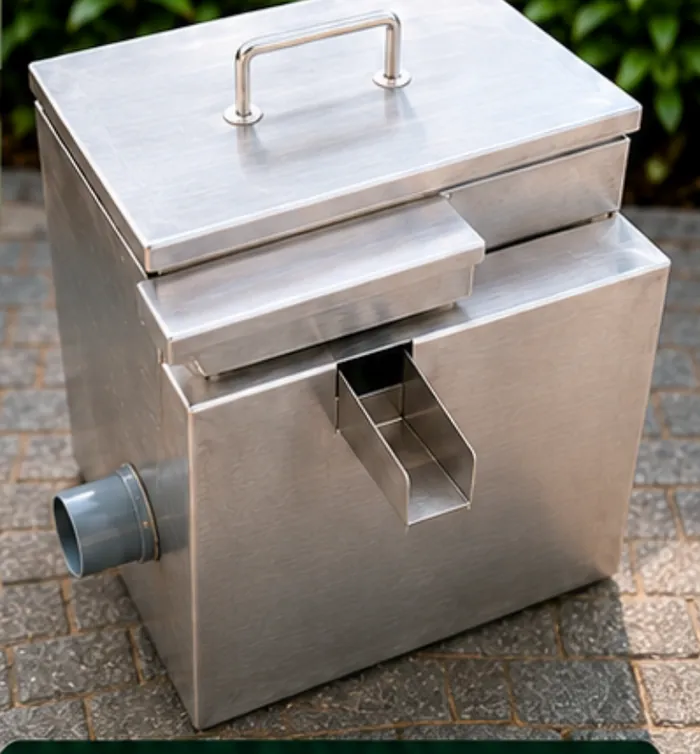
Prevents clogging
Traps grease and solid waste before either of them enters the sewer system.
Reduces maintenance cost
Fewer blockages downstream, and less pipeline maintenance to budget for across the year.
Improves hygiene
Cuts the odour that standing grease produces and keeps the kitchen environment clean.
Easy cleaning
Designed so collected waste lifts out and the tank rinses down, with no tools and no strip-down.
Compliant solution
Meets JKR and JPWP requirements for pre-treatment systems ahead of a sewerage connection.
Durable and reliable
High-toughness resin and stainless steel, for a component that sits in hot, greasy water every service.
Specifications
| Flow rate | 15 L/min |
|---|---|
| Inlet & outlet pipe size | 40 mm |
| Trap size (W × L × H) | 32 × 22.5 × 39 cm |
| Material | High-toughness resin & stainless steel |
| Type | Type B |
| Application | Pre-treatment before sewerage discharge |
Resin sections are moulded at 5.0 mm and 3 mm. The 40 mm inlet and outlet are the standard size for a commercial kitchen waste run, so the trap drops into an existing layout without reworking the pipes.
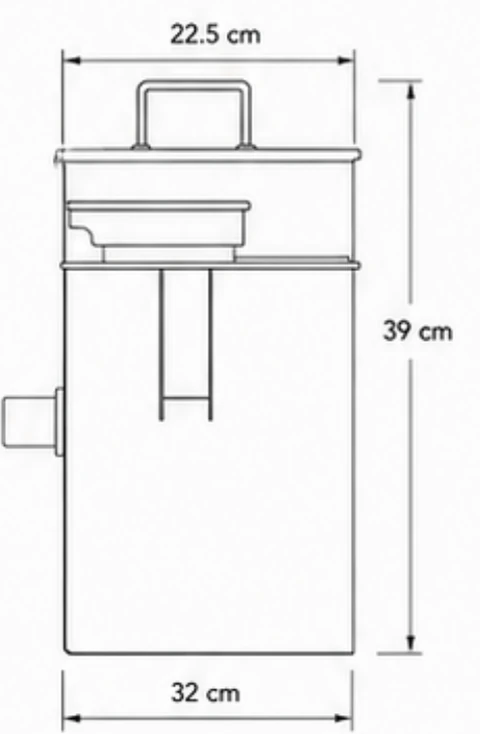
How it works
-
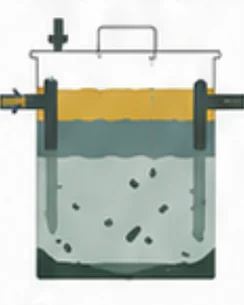 Wastewater inlet. Kitchen wastewater flows
into the trap through the inlet pipe.
Wastewater inlet. Kitchen wastewater flows
into the trap through the inlet pipe.
-
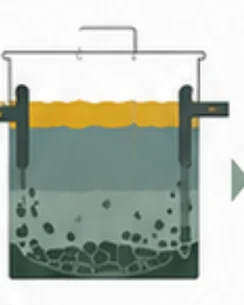 Grease separation. Fats, oils and grease
float to the top; solid waste settles at the bottom.
Grease separation. Fats, oils and grease
float to the top; solid waste settles at the bottom.
-
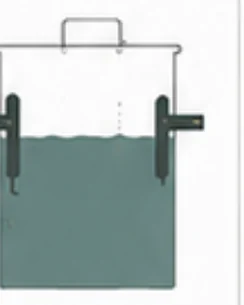 Clean water outlet. The treated layer
between the two leaves for the sewerage system.
Clean water outlet. The treated layer
between the two leaves for the sewerage system.
Emptying it
- Open the lid of the grease trap.
- Remove and dispose of the collected grease and solid waste.
- Rinse the tank, and refill if necessary.
No tools, no dismantling and nothing to dose. How often it needs doing is set by covers served rather than by a fixed interval — a single canteen and a food court will not be on the same schedule.
Where it fits
Trusted, certified, compliant
The Razak Three (Type B) was developed with the Malaysian Technology Development Corporation and carries a Malaysian Science, Technology and Innovation certification. It is a patented design.
- MySTI certified product
- Approved by JKR
- Developed with MTDC
- Recommended for JPWP projects in schools and institutions
Why pre-treatment is asked for
Grease does not stay liquid once it leaves a warm kitchen. It cools in the pipe run and hardens against the wall, catching solids as it goes, which is how a sewer connection narrows long before anyone reports a problem. A trap at the source is what the JKR and JPWP requirements exist to put there.
Measured over four months, not estimated.
Universiti Teknologi Malaysia monitored the grease trap system (brand: Rekabina Ran, model: Razak Two — the predecessor of the Razak Three above) from 22 February to 28 June 2021, analysing thirty samples of real kitchen wastewater taken at the inlet and the outlet.
Results, over thirty samples
| Parameter | Unit | Inlet | Outlet | Removal | Range |
|---|---|---|---|---|---|
| Oil & grease | mg/L | 215.5 | 4.1 | 98.1% | 85.7 – 99.8% |
| Total suspended solids | mg/L | 389.2 | 7.6 | 98% | 80 – 100% |
| Chemical oxygen demand | mg/L | 682.4 | 67.1 | 90% | 60 – 99% |
| Biochemical oxygen demand (BOD₅) | mg/L | 312.8 | 33.9 | 89% | 61 – 99% |
| pH | — | 5.4 – 6.1 | 4.6 – 6.3 | — | — |
Removal efficiency is calculated from the average inlet and outlet concentrations. Outlet oil and grease ranged from 1 to 46 mg/L across the thirty samples.
What was measured, and how
| Parameter | Unit | Test method | LOQ |
|---|---|---|---|
| pH | — | APHA 4500-H + B | 0.1 |
| Biochemical oxygen demand (BOD₅) | mg/L | APHA 5210B, APHA 4500 OG | 5 |
| Chemical oxygen demand | mg/L | APHA 5200C | 5 |
| Total suspended solids | mg/L | APHA 2540D | 10 |
| Oil & grease | mg/L | APHA 5520B | 1 |
APHA — Standard Methods for the Examination of Water and Wastewater. LOQ is the limit of quantification: the smallest concentration the method reports as a figure rather than a trace.
What it adds up to
- Outlet oil and grease typically well under 50 mg/L
- Solids removed at 98% on average, so less settles downstream
- COD down 90% and BOD₅ down 89% — a far lighter organic load
- Fewer blockages and less odour reaching the sewerage system
The conclusion, in UTM's words
The evaluation confirms that the grease trap system achieves high removal efficiencies for oil and grease, total suspended solids, chemical oxygen demand and BOD₅ throughout the monitoring period, and serves as a verified reference of the system's capability to meet pre-treatment requirements before discharging to the sewerage system.
Source: Final Report of Pilot Project for SPAN by Universiti Teknologi Malaysia, 7 August 2021. Unit tested: Rekabina Ran Razak Two.
Ask for the report
We can share the monitoring data and walk through what it means for a specific kitchen, along with the sizing and the discharge requirements that apply to it.